In 1320, the Arte della Lana — Florence's wool guild — burned an entire batch of cloth in the public square after a merchant substituted inferior thread. His business never recovered. Neither did his family's standing. The burning wasn't theater. It was information, broadcast to a community where economic reputation and social identity were not merely correlated. They were the same thing. The guild brothers who judged your cloth were the same people who would decide whether your son qualified for apprenticeship, the same people you'd see at your daughter's betrothal.
Hold that picture, because almost nothing about modern work resembles it — and the distance between then and now is the subject of this piece.
The world we lost (and shouldn't romanticize)
A medieval blacksmith wasn't someone who worked with metal. He was a blacksmith. That single identity determined where he lived, whom he married, which church pews his family occupied, how his sons would earn their bread. Economic function, social standing, moral obligation, and the rhythm of daily life arrived bundled in one arrangement.
Let me be precise, because nostalgia distorts as badly as triumphalism. The pre-industrial world was not an idyll. Poverty killed routinely. Most people owned fewer possessions than fit in a drawer. The guild system was also a technology of exclusion: a German jurist in 1683 codified that "masculine sex is one of the indispensable basic preconditions for admission to a guild." Women, Jews, migrants — all were barred. The integration was integration for insiders, and the boundaries that made it work were drawn along lines of gender, religion, and lineage. The brutality was real. The integration was also real. Holding both without letting either cancel the other is the discipline the history requires.
The reframe: not progress, but a trade
The conventional story of industrialization is a story of progress — more output, more wealth, more freedom. That story is true. It is also dangerously incomplete. The more useful frame is that industrialization made a trade, and the terms were never disclosed to most of the people who paid them.
Call the thing that was traded away the Integration Index: a measure of how tightly work, community, and self interweave at a given historical moment. In the guild world the index ran high. Your hours, your neighbors, and your sense of who you were all arrived in the same package. Industrialization drove every dimension toward zero — and did so by design, not by accident.
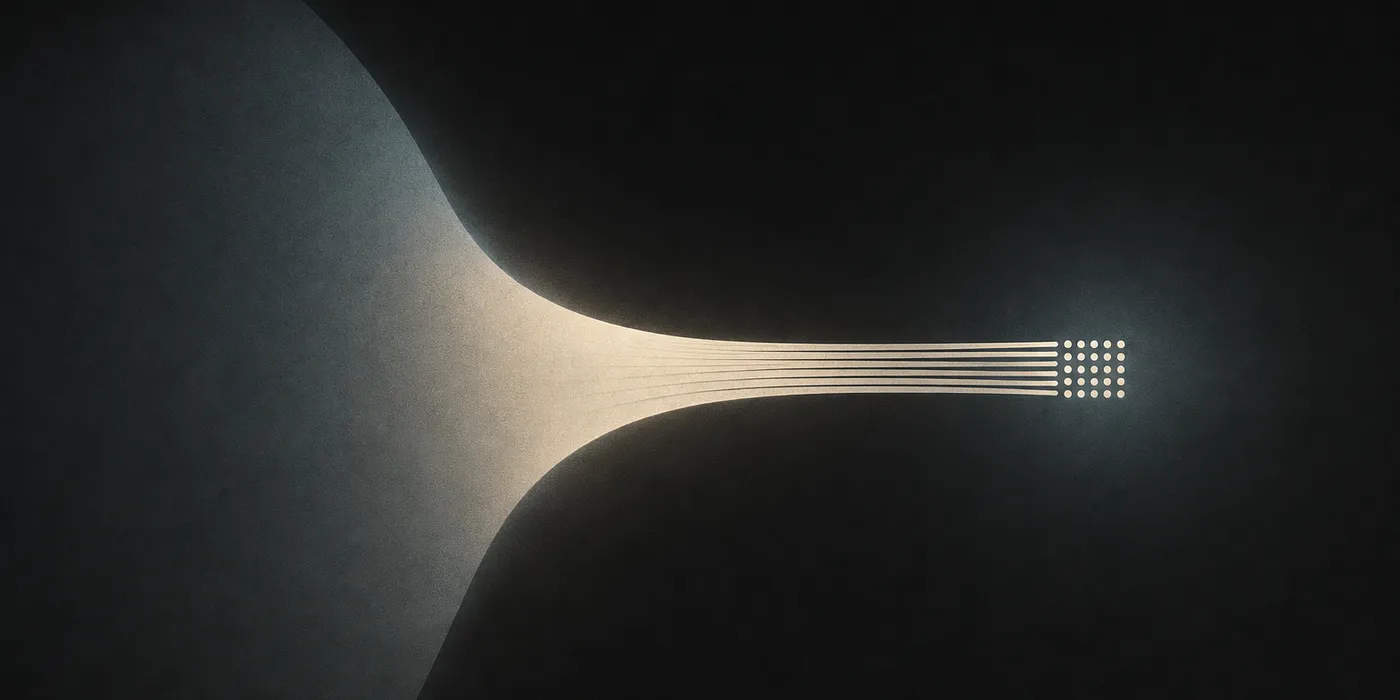
Figure: The Great Narrowing collapsed a multidimensional self into a single point — laborer. The open question is whether the next rupture narrows again, or unshackles.
The mechanism: how the prism collapsed
The instrument of the trade wasn't the steam engine. It was, first, the clock. In pre-industrial life you worked until the task was finished — until the horseshoe was fitted, until the harvest was in. E.P. Thompson called this task-orientation: work that contains its own logic of completion. Time was something you passed with neighbors. Then the factory needed synchronized, simultaneous labor, and the clock became the instrument of control. Factory owners locked timepieces in glass cases. Workers' only contact with time came through management's version. Time-oriented work has no internal criterion — you are done when the bell rings, not when the work is complete. Meaning was severed from the work itself.
Then came the de-skilling. Josiah Wedgwood, at his Etruria pottery works in the 1770s, divided what had been a whole craft into discrete tasks teachable in days. He didn't do this because he hated craftsmen. He did it because craft mastery was economically inconvenient — it made workers hard to replace, expensive to train, and prone to collective action. The de-skilling was a rational business decision. That rationality, applied systematically, produced a new kind of suffering. The mechanism, not the malice, is what makes the history worth studying.
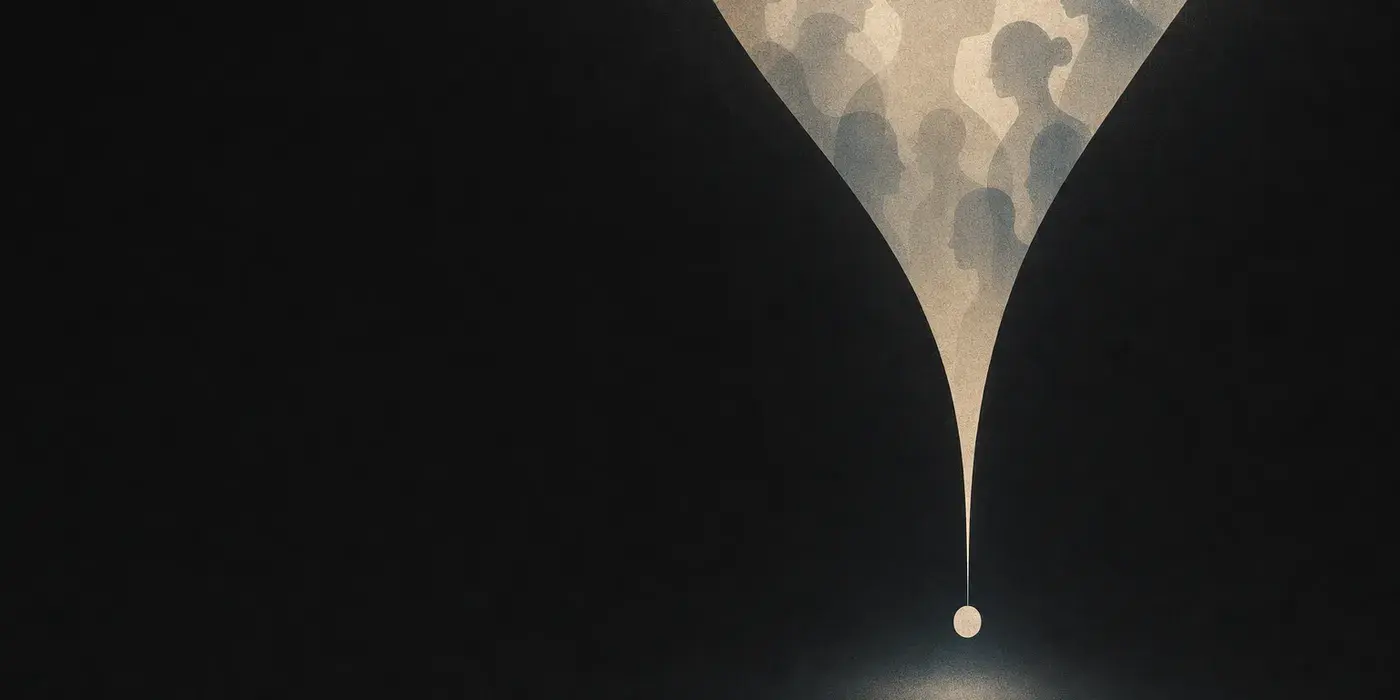
The result, aggregated across thousands of factories over half a century, was the collapse Hannah Arendt would later diagnose. The guild blacksmith had been craftsman, guild brother, parish member, teacher, neighbor, father, civic figure — roles that reinforced one another. The factory collapsed that prism into a single point: laborer. You were no longer a blacksmith who happened to live in Coventry. You were a worker who happened to operate machine #47 in the Coventry Ironworks. Managers didn't call you by name. They called you by station number. You weren't Mary or Thomas. You were Number 47 on the third shift.
This is what the Luddites were actually defending. In 1812, Nottingham framework knitters smashed stocking frames not because they opposed technology in the abstract, but because the frames threatened to convert them from weavers into operatives — from persons with a trade into bodies with a function. They lost. The frames kept coming. But they had diagnosed the wound before the doctors arrived to name it.
Why this matters now
If you run an organization, the Great Narrowing isn't a history lesson. It's a warning about a pattern that repeats. Industrialization moved humanity forward by specific material measures while severing specific human provisions the previous form had sustained. The costs landed on those with least power to resist; the benefits accrued to those with most power to capture. Engels' Pause — the roughly 60-year gap when real wages stagnated even as the economy grew — is the moral datum: for most people who lived through it, the transition was experienced not as progress but as deprivation.
We are now living through a second rupture, and the same questions apply. Concretely:
-
Name the trade before you make it. Every automation decision gives something and takes something. Industrialization's planners measured the gain (Adam Smith counted the pins) and never measured the loss. Audit both sides explicitly. What integration — of identity, judgment, belonging — does this design dissolve, and is that dissolution a choice you'd defend out loud?
-
Distinguish inevitability from choice. The Factory Acts proved that what looked like technological inevitability was institutional choice all along: once all firms faced identical rules, "ruinous" constraints turned out to be survivable. When someone tells you displacement is simply how it has to be, ask which rules are actually fixed and which are merely unexamined.
-
Don't strip identity as a side effect. Wedgwood broke craft identity deliberately, because fungible workers were cheaper. If your redesign makes your people interchangeable, you may gain short-term efficiency and lose the thing that made the work theirs. The loss won't show up in the wage data. It will show up later, the way it always does.
The principle
Ruptures of this scale are simultaneously progressive and diminishing. They generate abundance and sever integration at the same time. The factory owners of 1820 had no warning — they could only grieve what they saw disappearing, with no language for what was arriving. We have their testimony. That is an advantage they did not have, and it carries an obligation: to ask, while the second trade is still being negotiated, what, this time, is being traded? The answer is being written now, in decisions about what to automate and what human beings are for once cognitive labor follows physical labor into the machine.
The first rupture tells us one more thing: someone will build a patch. When the Great Narrowing destroyed the integrated world, the people who survived it built something in its place — cruder than what they'd lost, unequally distributed, but for a century it held. What they built was the corporation. Understanding what it actually provided, and why that provision is now ending, is where the story goes next.
Adapted from the essays accompanying AI‑Born by Mehran Granfar. Themes drawn from Volume I, "The Machine Core".