Definition
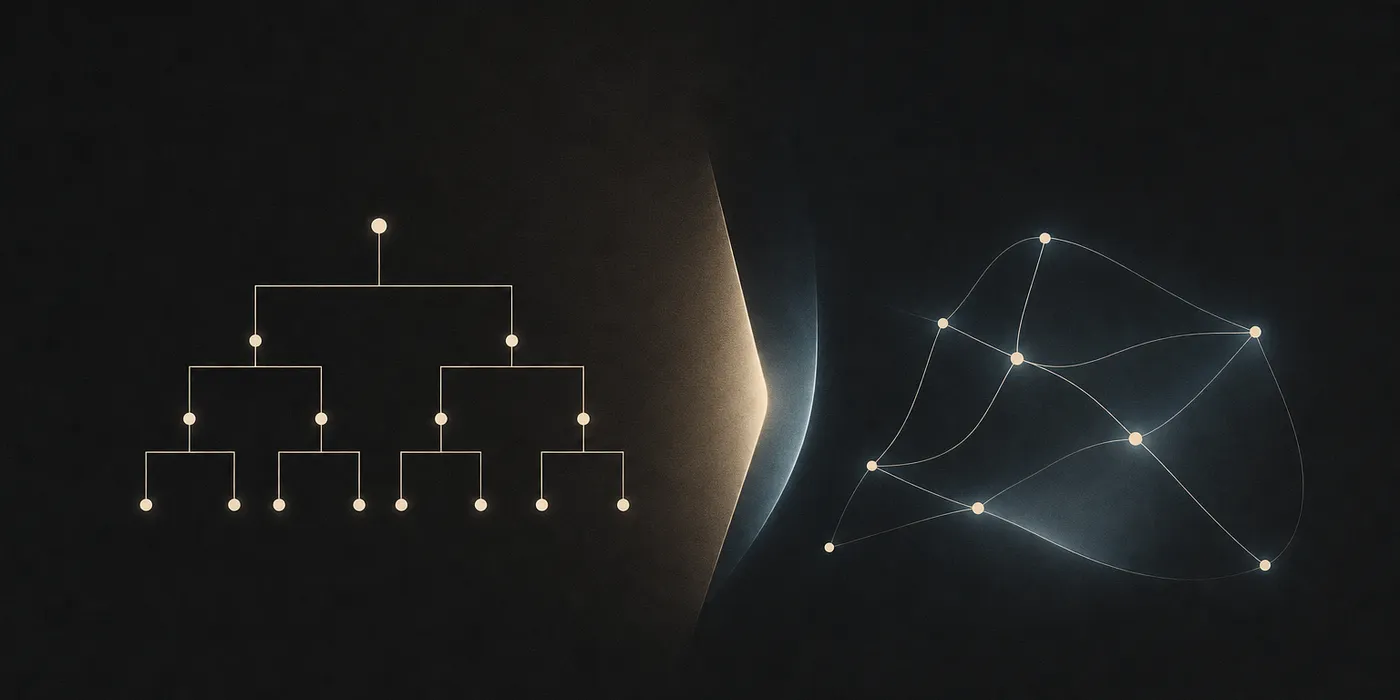
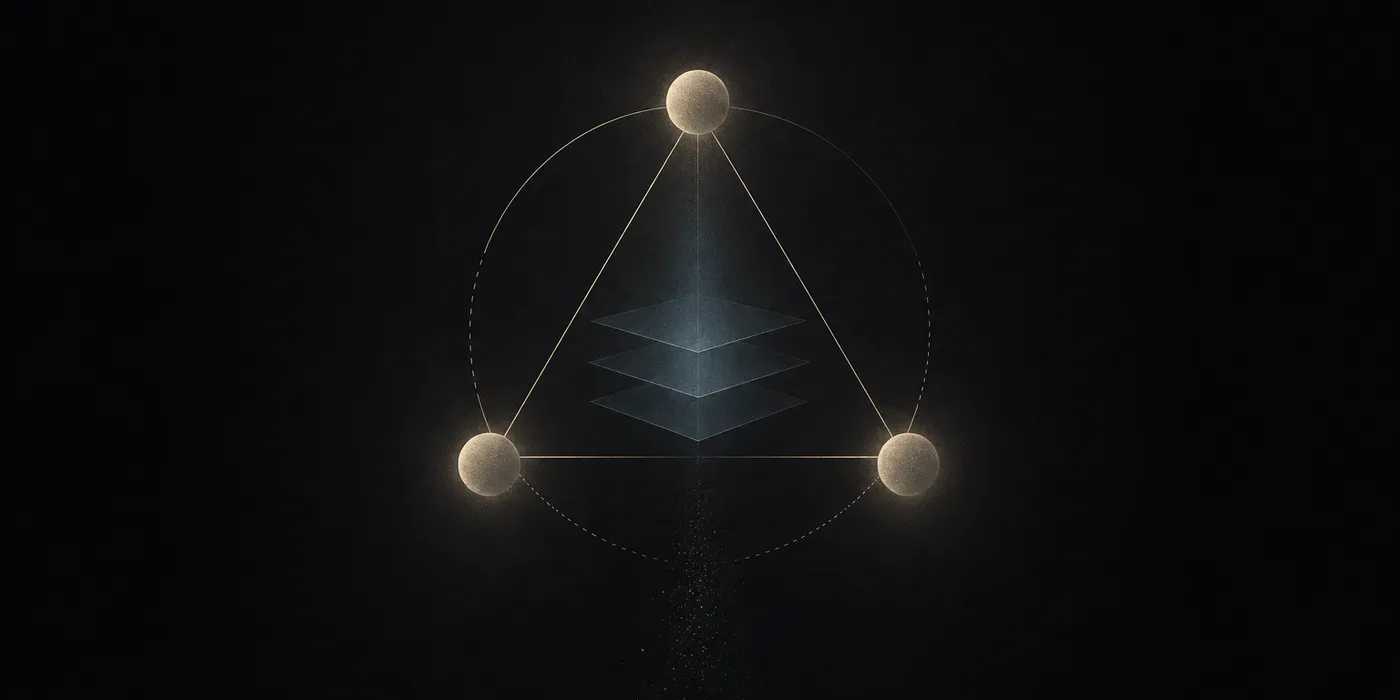
The Integration Index measures the degree to which work, community, and self interweave at a given historical moment. It runs across three dimensions: temporal (whether work rhythms follow the task and the season or the clock and the shift), social (whether economic activity is embedded in communal relationships or conducted as isolated transactions), and identity (whether work is something one is — inseparable from self — or something one does for a wage). In the guild world the index ran high: your hours, your neighbors, and your sense of who you were all arrived bundled in one arrangement. Industrialization drove every dimension toward zero at once. The Index is the instrument for reading that movement — and the question of the AI-Born era is whether the index can be deliberately rebuilt while prosperity is distributed.
It is a heuristic lens for comparative analysis, not a metric with standardized measurement protocols. Its value is interpretive: it reveals what a rupture severs, which is precisely what wage statistics miss.
The problem it solves
When we evaluate a major change in how work is organized, we tend to measure what is easy to count — wages, output, life expectancy, literacy. By those measures, industrialization was progress, and the case is genuine. But this accounting is incomplete. It cannot see the integration of work and identity and community that the factory dissolved, because that integration was never a line item. The Integration Index gives the loss a name and a structure, so it can be held in the same frame as the gain.
This matters as more than history. The first great rupture established a pattern; the second is underway. Reading the first through the Index — without romanticizing the guild world or excusing its brutality — is the preparation for asking the right question about the second: not only what is being gained, but what is being traded.
Anatomy
The three dimensions, drawn directly from the pre-industrial baseline:
- Temporal integration. E.P. Thompson's distinction between task-orientation and time-orientation is the core. The blacksmith worked until the horseshoe was finished; the weaver until the cloth was complete. Time was something you passed with neighbors, embedded in the season's rhythm — not something you spent alone, sold by the hour. The agricultural calendar — Lammas, Michaelmas — gave that rhythm its deepest structure. The factory clock, locked in its glass case, severed it.
- Social integration. Guild membership embedded workers in webs of obligation, reputation, and mutual aid that were simultaneously economic, social, and moral. When a master died, the guild provided for his widow. The factory replaced these bonds with competition for wages and a foreman's approval — the condition Durkheim named anomie.
- Identity integration. A blacksmith didn't work with metal; he was a blacksmith. That identity determined where he lived, whom he married, how his sons would earn their bread. The factory collapsed this prism into a single point — laborer — and called workers by station number rather than name.
The honest version of the framework holds two truths at once. Integration was real: genuine belonging, genuine mastery, genuine community. So was its cost: genuine poverty, systematic exclusion of women, Jews, and migrants, years of unpaid apprenticeship, near-total absence of mobility. The discipline the Index demands is to let neither truth cancel the other.
Figure: The blacksmith embodied high integration — work, community, and identity bundled in one role; industrialization fragmented that whole into interchangeable tasks, driving every dimension of the Index toward zero at once.
How it works in practice
Run the Index across the first lineage break and the movement is unmistakable. In 1320, the Arte della Lana guild burned a merchant's defective cloth batch in the public square; his business never recovered, and neither did his family's standing. The punishment worked because economic reputation and social identity were the same thing, legible to the same community — neighbors, creditors, the priest who heard your confession, the guild brothers who would decide whether your son qualified for apprenticeship. To produce inferior work was not a business error but a moral failure, legible to the community as such. High on all three dimensions — and, in the same breath, structurally exclusionary: women were barred from full membership, Jews denied citizenship, entry fees in 15th-century Paris equal to a skilled craftsman's annual wage. The integration was integration for insiders, and the boundaries were the mechanism that made it work.
Then enclosure converted shared common land into private property — over 4,000 Enclosure Acts between roughly 1750 and 1850 — and the factory completed what enclosure began, inventing the "job" as a standardized, fungible unit of human time. The clock was the precise instrument: locked in a glass case, workers' only contact with time came through management's version, calibrated to trigger tardiness fines. Marx mapped the result as four wounds: alienation from the product (the pin-maker who never saw the finished object), from the process (the worker as appendage of the machine), from others (anomie replacing guild webs of mutual aid), and from self (Number 47 on the third shift). Wedgwood's Etruria factory makes the mechanism concrete: he deliberately divided pottery into de-skilled tasks teachable in days, converting craftsmen into operatives — people who identified with a trade into people who identified with a wage. The de-skilling was a rational business decision; that rationality, applied systematically enough, produced a new kind of suffering. This was the Great Narrowing: the multidimensional guild identity — craftsman, guild brother, parish member, teacher, neighbor, father — collapsed into one point, laborer.
The human cost was named in the parliamentary record. A Stockport spinner worked 5:30 a.m. to 8:00 p.m.; Elizabeth Bentley left her Yorkshire village at six and by twenty-three her spine had curved from constant standing. The mill girls stopped singing because singing slowed production — "Now I don't remember any songs." The flatness of the testimony is the point: the witnesses had no comparison point, no prior experience against which to measure what they endured. And the gains arrived late — Engels' Pause, the roughly sixty years when real wages stagnated while the economy grew, means the people who paid the steepest costs were generally not those who captured the benefits. By 1900 real wages had more than doubled from their 1780 baseline; the surplus funded the Factory Acts, public health reform, compulsory education, the water infrastructure that ended cholera in London. Both ledgers are real. The Index is what keeps them in the same frame.
How to apply it
- Score the three dimensions before and after a change. For any proposed reorganization of work, ask: does it move temporal, social, and identity integration up or down? A change can raise output while lowering all three — that is the signature of a narrowing.
- Separate the gain accounting from the integration accounting. Run both ledgers. Material abundance, literacy, life expectancy belong on one. The interweaving of work, community, and self belongs on the other. A complete evaluation refuses to let a strong first ledger silence the second.
- Ask who pays and who captures. The first rupture distributed costs to those with least power to resist and benefits to those with most power to capture, on a timeline of a lifetime or longer. Use the Index to flag whether a new transition is repeating that distribution.
- Design for re-integration, not restoration. The aim is not to recover the guild — its exclusions were structural to its integration. It's to rebuild the index with modern autonomy and mobility. That's the work the rest of the book turns to.
Failure modes / misuse
- Romanticizing the high-integration past. The guild world was not an idyll. Integration came at brutal cost, and the boundaries that produced belonging were drawn along lines of gender, religion, and lineage. The Index is useless if it becomes nostalgia.
- Treating it as a precise metric. It's a comparative lens, not an empirical score with measurement protocols. Claiming a decimal-point reading overstates what the framework can carry.
- Reading severance as inevitability. The first rupture looked like technological inevitability but revealed itself, when institutional rules changed (the Factory Acts), to have been institutional choice. The Index should surface choices, not excuse outcomes as fate.
Relationship to other frameworks
The Integration Index is the historical foundation the rest of the argument builds on. The corporation's attempt to rebuild the index within wage labor is structured by the The Three Trades, and the identity it traded on is named by Utilitarian Man. The The Lineage Break is the rupture mechanism the Index measures across eras. And the deliberate re-integration the framework finally argues for is the move toward an [[economy-of-doing-to-being|economy of being]].
Origin note
Original to this manuscript. The three-dimension diagnostic synthesizes historical analysis of pre-industrial integration and industrial fragmentation; it draws on Thompson, Marx, Durkheim, and Arendt as sources but assembles them into a comparative lens developed by the author.
One of the frameworks running through AI‑Born by Mehran Granfar. Developed across Volume I, "The Machine Core".