A master blacksmith in 14th-century Florence knew things his hands could do that no one could write down. He also knew his buyers by name, knew whose horse wore his shoes, knew that the guild brothers inspecting his work were the same men who would testify at his son's apprenticeship hearing. His craft, his community, and his sense of self were not three things he balanced. They were one thing he inhabited.
We have almost entirely lost the felt sense of this. And the loss is more measurable than it sounds.
The tension: we treat integration as a luxury
Most modern thinking about work treats meaning, belonging, and identity as soft extras — perks layered on top of the real business of producing output. Get the compensation right, the reasoning goes, and the rest is a nice-to-have. There's a fair version of this view: pre-industrial integration came bundled with genuine horrors — rigid hierarchy, systematic exclusion, grinding poverty — so treating it as something to recover can look like nostalgia for a world that was, for most people, brutal.
That caution is correct as far as it goes. But it mistakes the bundle for the mechanism. The exclusions and the integration were separable. What the guild world actually demonstrated was that work, community, and identity can occupy a single architecture — and that when they do, something real holds people together that no paycheck reproduces.
The reframe: integration is a quantity, and it crashed
Call it the Integration Index — a measure of the degree to which work, community, and self interweave at any given historical moment, across three dimensions: temporal, social, and identity. In the guild world the index ran high. Your hours, your neighbors, and your sense of who you were all arrived in the same arrangement. Industrialization drove every dimension toward zero at once.
Read that way, the story of the last two centuries isn't only a story of rising wealth. It's a story of a falling index — and the recovery of that index, not the recovery of the guild, is what's actually at stake.
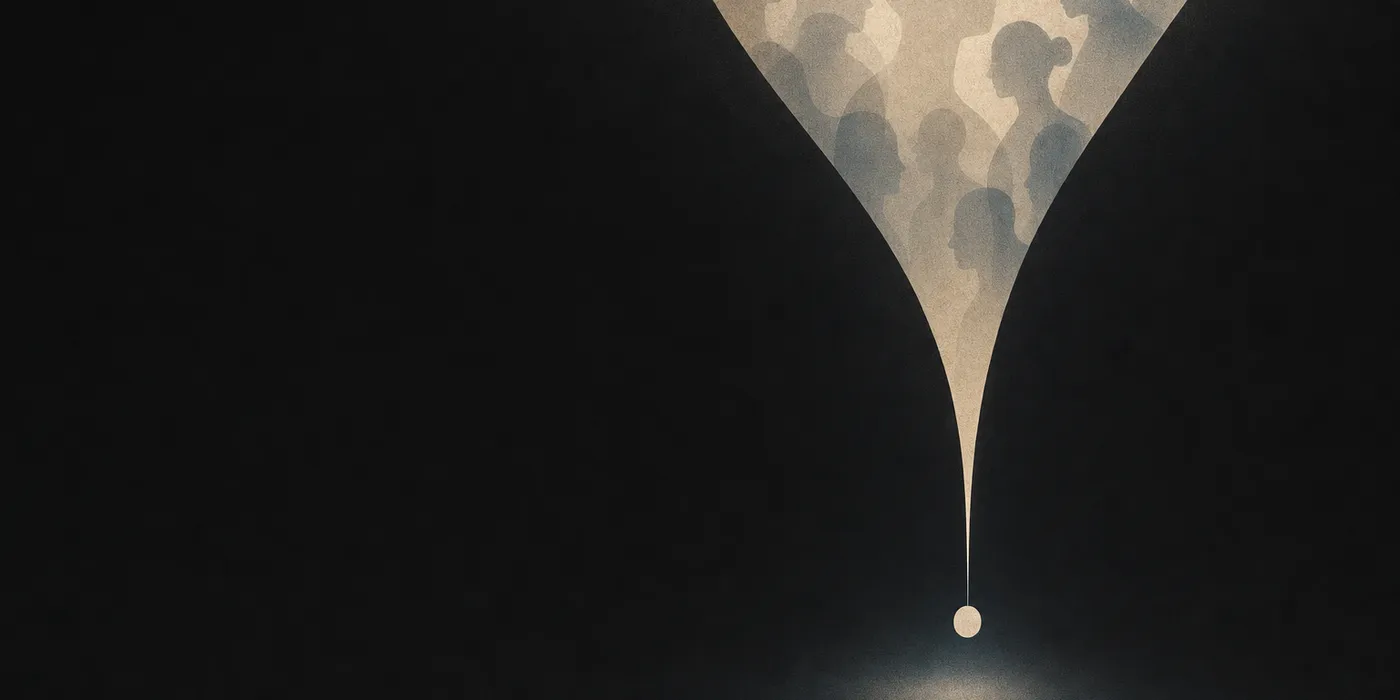
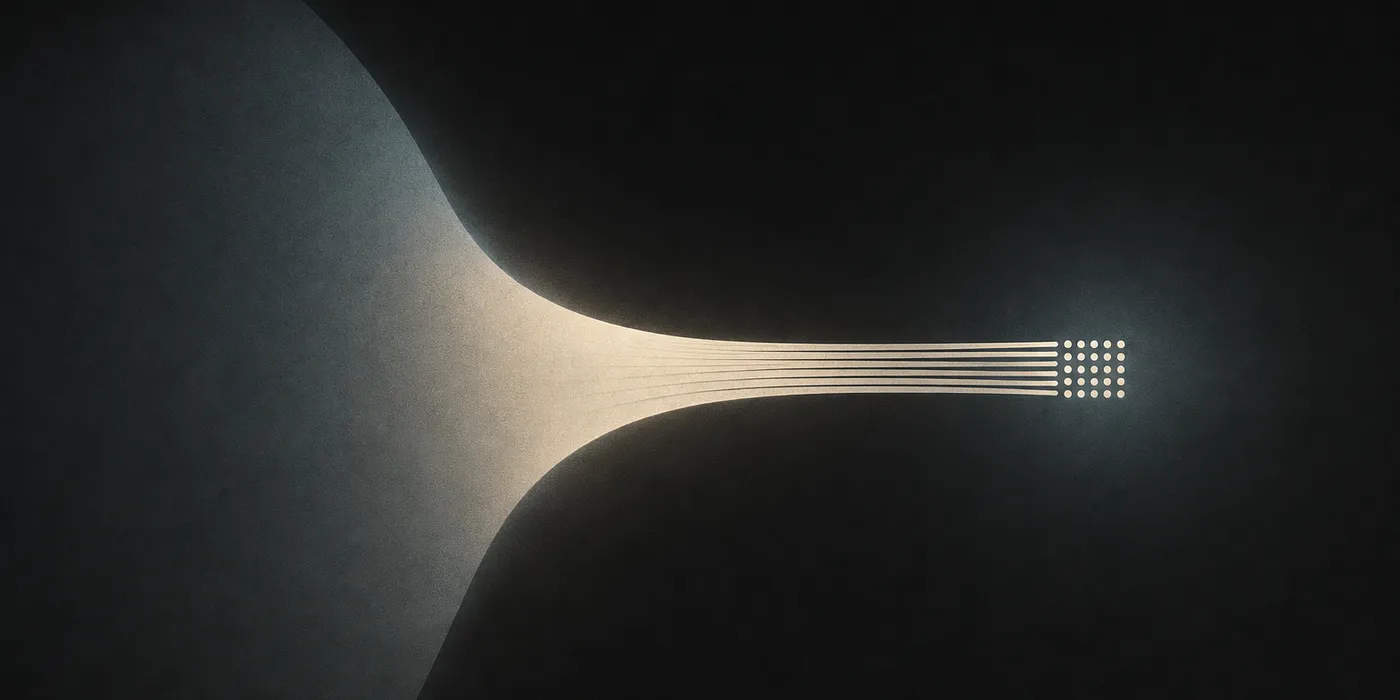
Figure: Integration vs. fragmentation. The guild blacksmith held the whole arc of his craft; the factory decomposed it into interchangeable functions. The Integration Index tracks what was lost in the decomposition.
The mechanism: three dimensions, three severances
Look at how each dimension actually fell.
Temporal integration went first. Pre-industrial labor followed the logic of the task: you worked until the cloth was complete, calibrated to what the land and season required rather than to what a clock decreed. Thompson's phrase captures the shift exactly — time went from something you passed with neighbors to something you spent alone, sold by the hour. Passed time you shared; spent time you gave up. One is abundance; the other, depletion. The agricultural calendar — Lammas at the first harvest, Michaelmas settling accounts — gave the year its punctuation. Spiritual observance and economic activity were not competing claims on your time. They were dimensions of the same life. The factory bell replaced all of it.
Social integration went next. Guild membership embedded workers in webs of obligation, reputation, and mutual aid that were simultaneously economic, social, and moral. When a master died, the guild provided for his widow. When an apprentice fell ill, the guild intervened. The factory replaced this with competition — workers competing for wages and a foreman's approval. Émile Durkheim named the resulting condition: anomie, the state of a person who has lost connection to the larger social organism, present in the factory's discipline but belonging to no community it recognized.
Identity integration went last and deepest. Hannah Arendt articulated what Marx had identified: human beings disclose who they are through their actions and creations. The production line was designed to disclose nothing. You were interchangeable; your replacement already stood outside the gate. The work didn't require you specifically — it required a body of approximately your dimensions, available for your particular shift. That is why managers called workers by station number rather than name. The fungibility wasn't incidental. It was the product.
What makes the index a useful tool rather than a lament is that the three dimensions move somewhat independently. A job can offer real belonging and no craft depth. It can offer mastery and no community. The guild's distinctive achievement was scoring high on all three at once — and that combination, stripped of the guild's exclusions, is the design target worth naming.
Why this matters now
The second rupture is rebuilding the architecture of work from scratch, which means the Integration Index is, for the first time in a century, a design variable rather than a historical artifact. If you're building an organization in the AI-Born era, you are setting the index — whether you mean to or not. Some practical implications:
-
Measure the index you're actually producing. For the humans who remain in a small, AI-leveraged team, ask the three questions directly. Temporal: do they control the rhythm of their work, or does an external clock? Social: are they embedded in a web of mutual obligation, or atomized? Identity: does the work disclose who they are, or could any body of their dimensions do it? You will not improve what you refuse to measure.
-
Don't assume small teams integrate automatically. A seven-person company can be as anomic as a factory floor if the humans are reduced to monitoring dashboards. Smallness creates the opportunity for high integration. It does not guarantee it.
-
Separate the achievement from the exclusion. The guild's integration depended on boundaries drawn by gender, religion, and lineage. That dependency was contingent, not necessary. The challenge is to reconstruct the integration without reconstructing the guest list — to build belonging that doesn't require someone outside the wall.
-
Treat task-orientation as recoverable. The clearest gift the guild world offers is the task-oriented rhythm: work organized around completion rather than hours. AI-Born work, where humans set direction and agents execute, can in principle restore this — judgment work has its own logic of completion. Whether it does depends on whether you design for it.
The principle
The guild world knew something we forgot: that work, community, and identity are not naturally separate, and that holding them together is an architectural choice, not a sentimental wish. The factory proved they could be torn apart. The question the second rupture poses is whether the next form tears them apart again — or whether, knowing what the index measures and why it fell, we build something that scores high on all three dimensions without the wall around it. The blacksmith's integration was real. So was his exile of everyone who wasn't him. The work now is to keep the first and refuse the second.
Adapted from the essays accompanying AI‑Born by Mehran Granfar. Themes drawn from Volume I, "The Machine Core".