Definition
A participation dividend is income paid for socially valuable contribution that the market systematically refuses to price: the parent managing a relative's dementia care, the neighbor coordinating a mutual-aid network, the volunteer tutoring adult literacy on Wednesday nights. It rewards contribution rather than employment. In Book 2 it is the second of three mechanisms for distributing AI-driven productivity gains broadly, sitting between steward-ownership (which governs control) and public-purpose funds (which govern distribution of equity returns). The participation dividend governs purpose and identity—what people do when markets no longer need their labor.
A point of terminology the book is careful about, because conflation here breeds confusion. The productivity dividend is the total economic surplus AI automation creates—the expanding pie itself. The participation dividend is one mechanism for distributing that surplus by rewarding civic contribution with income. The first is what AI generates; the second is how displaced workers share in those gains while contributing to their communities. They share a name because they share a purpose, but they operate at different levels.
The problem it solves
Markets price transactions brilliantly and struggle with everything that never appears on a balance sheet. A caregiver's labor is essential and unpaid; a community cannot function without it, yet the market values it at zero. That gap between market price and social necessity is the first failure the participation dividend closes. The second is the absence of any mechanism linking displaced workers to the productivity gains their former expertise helped create. When a 12-person AI company generates $100 million in annual revenue and the workers whose accumulated knowledge trained the models capture nothing, the connection between value creation and livelihood is severed.
The timing makes this acute. In February 2026, Goldman Sachs chief economist Jan Hatzius told the Atlantic Council that despite roughly $700 billion in U.S. AI infrastructure investment across 2025, AI had contributed "basically zero" to GDP growth. The productivity dividend is real but lagged—disruption arrives in households now, while broad gains are projected for later. That gap between displacement and dividend is exactly where social architecture either holds or breaks.
Anatomy
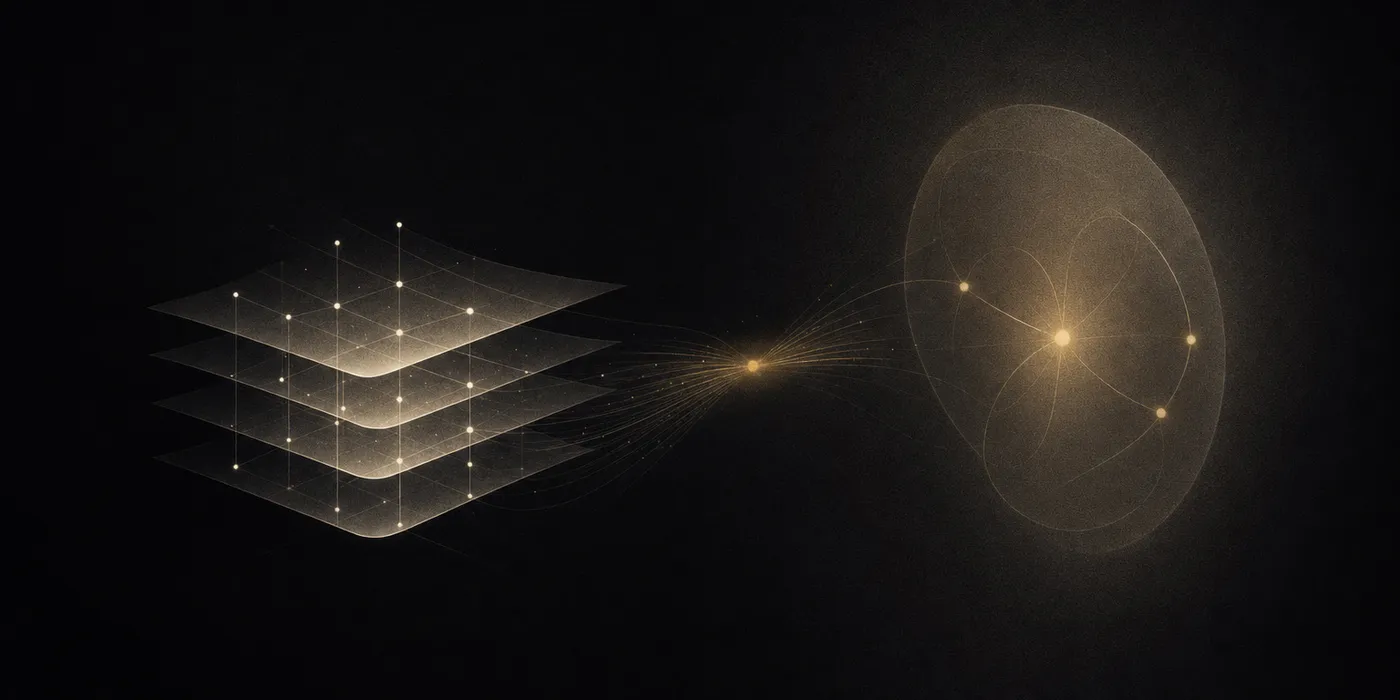
Figure: The participation dividend is the middle mechanism in the three-part "capitalism, upgraded" architecture—governing purpose and identity between steward-ownership (control) and public-purpose funds (distribution).
The participation dividend has four working parts, and the order in which they fail tells you where to reinforce.
-
The rate. A civic contribution system sets compensation at roughly $15–20 per hour—below formal market rates, but substantial combined with part-time work, productivity dividends, and a partner's earnings. Not comfortable. Not replacement income. Foundation. Independent Sector valued volunteer time at $34.79 per hour in 2024; the civic stipend compensates work markets ignore, not work markets have already priced. This is framed as a market correction, not a wealth transfer.
-
Verification. Fraud comes first. The UK's Spice Timebank validates each contribution against multiple independent sources, holding fraud below 2% across 450,000 Time Credits issued to 30,000 participants. Without credible verification, the whole structure collapses into a payout-for-claims scheme.
-
Community-defined quality. Standards cannot be uniform. Caregiving for vulnerable populations needs different vetting than coordinating a neighborhood cleanup, so standards are set by communities rather than imposed from a spreadsheet.
-
Access. The safeguard most often forgotten until too late. A system that structurally excludes single parents and rural residents isn't a civic contribution system—it's a middle-class subsidy with civic branding. Build childcare and transportation into the design, or the design quietly selects for the already-comfortable.
Underpinning all four: a constitutional allocation of 2–3% of AI productivity gains that legislators cannot raid—the Alaska model applied to civic rather than financial returns.
How it works in practice
Return to David Torres, the Toledo quality-assurance veteran whose department AI replaced after twenty-two years. He downloaded the same Claude that Stanford-trained Priya Anand used to build a venture-funded diagnostic startup; he built a functioning inventory-optimization tool. No accelerator in Toledo, no investor network, no Stanford introductions. The tool worked. He couldn't convert capability into livelihood.
In a city with a civic contribution system, David has a path—not Priya's venture trajectory, but something real. Twenty hours weekly applying two decades of quality-assurance expertise to the regional food cooperative, the neighborhood emergency-preparedness committee, the high school robotics program. His expertise, which markets no longer price, becomes visible and compensated in a different register. The stipend doesn't replace his career. It removes the economic desperation that makes reorientation impossible. And the cooperative manager who discovers that David's background solves a real supplier problem—that discovery happens only because David is there, because the stipend made it possible for him to show up.
The math works at scale. If a 12-person team generates $100 million annually, redirecting 2–3% to civic infrastructure is rounding error while creating the social stability that enables continued innovation. Community foundations erode without maintenance. Civic stipends are infrastructure maintenance, not charity.
How to apply it
- Distinguish the two dividends. Decide whether you are designing the surplus (productivity dividend, a national equity question) or the distribution-by-contribution mechanism (participation dividend, a municipal-and-state lever). Conflating them produces paralysis.
- Pilot small, then scale on evidence. A 10-city pilot in years one through five tests fraud rates, labor-force-attachment effects, and quality of contribution before state expansion (years six through twelve) and national integration (year twenty). Alaska ran 30+ years before its design was considered proven.
- Set the rate as correction, not transfer. Anchor below market wage but above zero, and say plainly that you are pricing work markets ignore.
- Build the four safeguards in order: verification, community-defined quality, access infrastructure, then a protected funding base.
- Operationalize Atkinson. Economist Anthony Atkinson proposed "participation income" in 1996: conditional income requiring socially useful contribution rather than paid employment. Preserve the reciprocity element—survey research finds higher public support for conditioned programs than unconditional transfers.
Failure modes
- The "paying people not to work" objection. The empirical record answers it. Four decades of Alaska's Permanent Fund show no aggregate employment effect, with a modest increase in part-time work—people used income security for flexibility, not withdrawal. AmeriCorps alumni show higher subsequent employment than matched non-participants. Civic participation builds career pathways, not dependency.
- Scaling uncertainty. Alaska and AmeriCorps remain relatively small. Whether stipends keep their pro-social character when 30% of a population participates is empirically unknown. This argues for phased pilots, not abandonment—and not for waiting on certainty, because displacement is already underway.
- Access collapse. Skip the childcare and transportation design and the program becomes a subsidy for the already-comfortable. Mechanisms that widen the circle only help if access to the circle is genuinely broad.
- Mistaking it for the whole answer. The participation dividend addresses purpose and identity. It does not address who captures the equity value of AI productivity in the first place—that requires public-purpose funds. Nor does it address control, which requires steward-ownership. Remove any one mechanism and the other two bear a load they weren't designed to carry.
What it is not
It is not universal basic income. UBI substitutes income for employment unconditionally; the participation dividend preserves reciprocity by tying income to recognized contribution. It is not charity—it is a correction to a market that prices caregiving and civic work at zero. And it is not redistribution in the contested sense: redistribution moves existing wealth ex post and requires ongoing political will; the participation dividend creates income-generating pathways before workers are displaced, encoding distribution into structure.
Relationship to other frameworks
The participation dividend is one leg of the three-mechanism architecture the book calls "capitalism, upgraded," alongside VC-to-Steward Pathways (steward-ownership, governing control) and public-purpose funds (governing equity distribution). It is the income layer beneath the Economy of Doing → Economy of Being—the mechanism that compensates the care, craft, and community work that becomes central when execution is automated. It extends the income-floor pillar of the The Three-Pillar Bridge from survival toward recognized contribution. And it expresses Stewardship as Competitive Advantage at the level of the whole economy: a firm redirecting 2–3% of gains to civic infrastructure is buying the social stability its own continued innovation depends on.
Origin note
Original to this manuscript. The participation dividend synthesizes sovereign-wealth-fund models (Alaska), Anthony Atkinson's 1996 "participation income" proposal, and civic-contribution valuation into a single framework for AI-era value distribution. The mechanism design (rate, verification, community-defined quality, access, protected funding) is original; the precedents cited—Spice Timebank, AmeriCorps, Germany's Pflegeversicherung caregiver stipends—are real and used to ground the proposal, not to claim them as the framework.
One of the frameworks running through AI‑Born by Mehran Granfar. Developed across Volume II, "The Bridge".